← Back to rubinobservatory.org

Friday, May 4, 2018

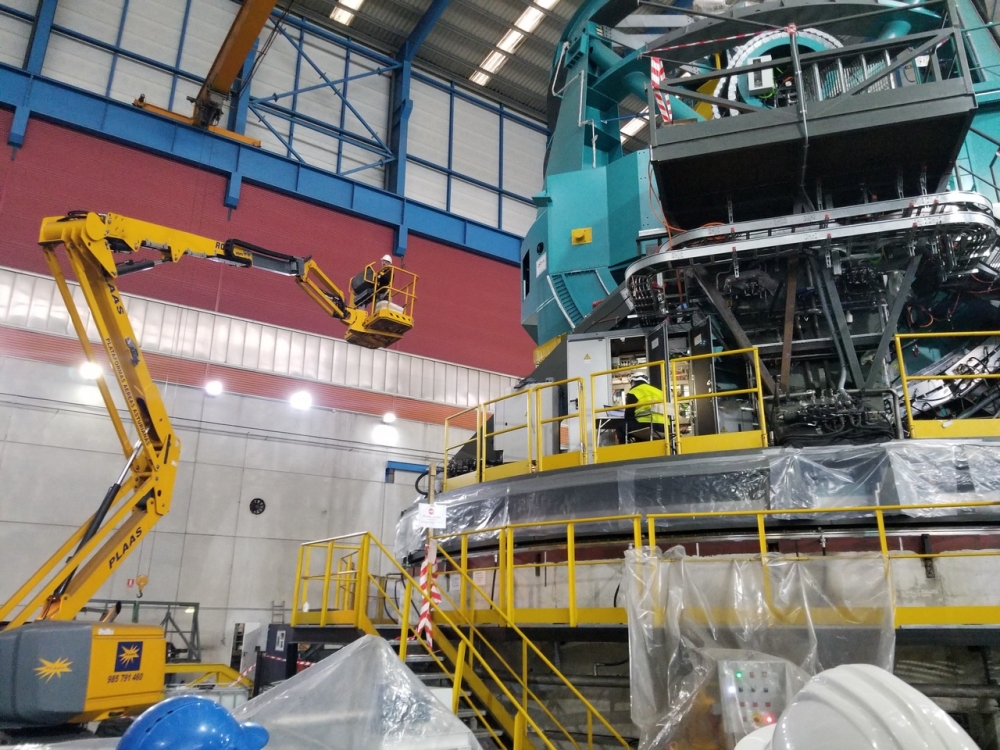
May 4, 2018 - An LSST team spent 5 days in Spain last month conducting a thorough safety review of the Telescope Mount Assembly (TMA) at the facility of vendor Asturfeito. LSST Safety Manager Chuck Gessner, Telescope and Site Technical Manager Shawn Callahan, Senior Systems Engineer Austin Roberts, and Lead Electrical Engineer Oliver Wiecha inspected the numerous safety features included in the TMA, and reviewed the procedures by which the group of vendors responsible for building the TMA (referred to as UTE) will verify that the hazard mitigations meet LSST requirements. The team determined that although there are still actions that must be completed by the vendors before the TMA ships to Chile (currently scheduled for November 2018), everything is on track to be finished in time. At the conclusion of the review, Asturfeito and designer Empresarios Agrupados (EA) were given approval to begin Factory Acceptance Testing for the TMA.

“Back in the early design days,” says Chuck Gessner, “we used Military Standard 882 and our own personal experience working on large telescopes to help us identify and document potential hazards.” The process became an official LSST policy (LSST Hazard Analysis, or LPM-49) and was included in the design documents presented to the vendors for the TMA. The corrective measures or mitigations that were also identified to eliminate or minimize the hazards were written into the LSST/vendor contracts. Each mitigation or safety feature built into the TMA will be evaluated separately by documented test procedures during the Factory Acceptance Tests to ensure not just that it has been built, but also that it functions as intended to prevent accidents or injuries before shipment to Chile. The recent review was significant because it marked the first time many of these longstanding design elements could be inspected as physical parts of the telescope.

The TMA presents numerous safety challenges for individuals working on and around it, many of them related to the massive size of the structure. The elevation drive, for example, which will eventually move on a pre-programmed cadence, weighs approximately 151 tons. It’s critical from a safety perspective that this structure can be locked in place when people are working around the telescope. Therefore, it has giant dedicated stay-pins that can be set in place to prevent unexpected movement of the drive.

In Chile, workers will regularly need to access parts of the telescope that are far off the ground, so the TMA also includes features that allow them to do this safely. A versatile articulating boom lift (shown in the photo above) can be maneuvered into position to allow an individual to access the center section of the telescope while safely harnessed to the secure lift basket. Additionally, although not yet installed, a set of deployable platforms will be situated on top of the fixed platforms on the side of the TMA structure. These platforms can be moved towards the camera, providing stable structures for workers (who will also be wearing fall protection gear) to stand on while accessing the camera to change filters or perform maintenance on it.

The silent azimuth and elevation linear drives will operate using magnet assemblies (shown in the photo on the left below) that have been installed on the drive arcs, and the DC power to run the motors will be supplied by large capacitor banks. Mitigations related to the hazards of these capacitor banks were also inspected during the safety review; for example, the capacitor cabinets (the orange boxes in the photo below) are designed with an interlock that prevents the doors from being opened when the voltage inside the cabinets is unsafe.

These are just a few of the 149 mitigations or precautions LSST and designer EA have taken to make sure people are safe working on and around the TMA. During the Factory Acceptance Testing in the coming months all of the mitigations will be tested and verified. And in Chile, where the TMA will arrive late this year, the team of LSST safety personnel and engineers is growing as integration activities increase. Read more about LSST’s commitment to safety here, and view more photos from the recent TMA visit in the LSST Gallery.


Thursday, April 26, 2018

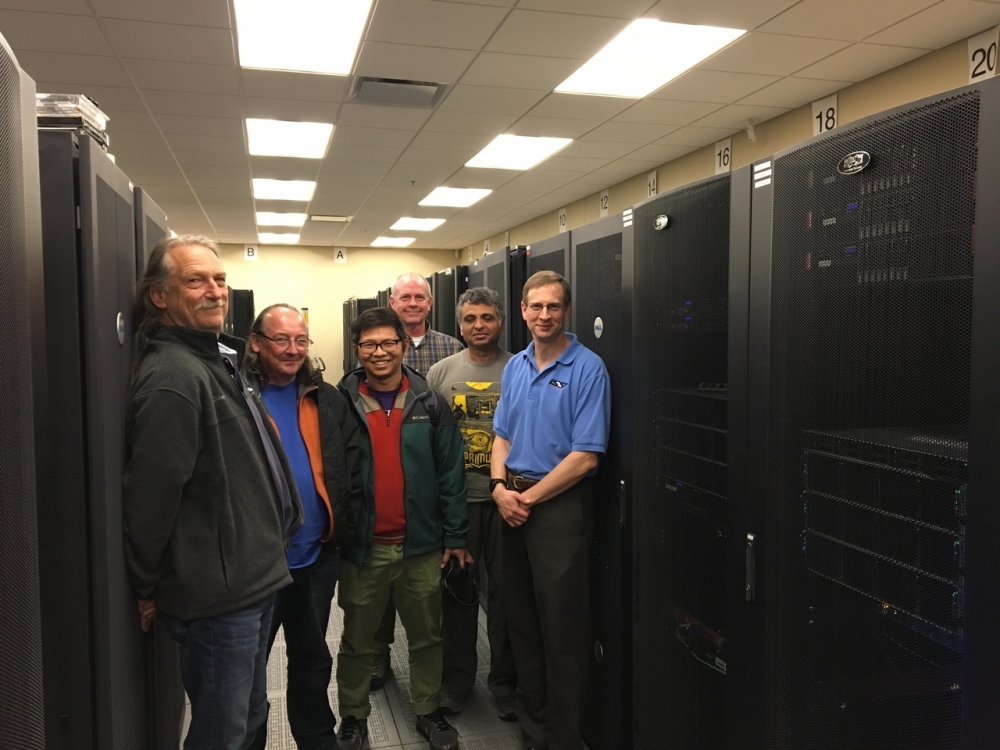
April 26, 2018 – An LSST cross-project team met at the National Center for Supercomputing Applications (NCSA) earlier this month to conduct the latest in a series of Early Integration Pathfinder Activities. This activity focused on simulated control and image collection for the nominal Auxiliary Telescope visit sequence. The exercise was the culmination of intense effort from a distributed group of LSST project members, and it offered the opportunity for participants representing different subsystems to align expectations, resolve issues, and determine priorities for next steps.

The goal of this Pathfinder activity was to exercise the Auxiliary Telescope (AT) software subsystems in performing sequences related to the operation of the AT, including startup and shutdown of all subsystems, commanding telescope movements, and the creation of images with the Auxiliary Camera. Although many of these sequences had been successfully run prior to this activity, an entirely new set of APIs, specific to the Auxiliary Telescope and Camera, were developed in the weeks leading up to the event. An additional sequence for producing and archiving images as FITS files was also tested for the first time. This sequence will be very similar to the one used by the main LSST Camera, so the progress made during this exercise will be extremely useful in the future.

The equipment used in this activity was the NCSA L1 Test Stand, which provides an environment in which software can be tested in the absence of the actual telescope and camera hardware. The activity at NCSA was a software-only test, but as hardware components of the Auxiliary Telescope become available, they will be integrated into the test process. Therefore, as the activities progress, the testing environment will increasingly resemble the actual environment on Cerro Pachón during operations.

The next Pathfinder activities are scheduled to occur in May and June in Tucson, and will be focused on getting real pieces of the Auxiliary Telescope hardware, including the spectrograph, working with the same APIs that were tested at NCSA. A full-sized photo of the participants present at NCSA is available in the LSST Gallery, and the complete list of participants, including those who participated remotely, is below.

Participants in the April 3-4 Early Integration Pathfinder Activity:

AuxTel DM Archiver: James Parsons, Htut Khine
AuxTel Camera: Tony Johnson, Farrukh Azfar
AuxTel Control: Harini Sundararaman, Andres Anania
AuxTel DM Header Service: Felipe Menanteau
AuxTel Scheduler: Tiago Ribeiro
DM Observer: Kian-Tat Lim
OCS EFD: Dave Mills
OCS Executive: James Buffill
Exercise Coordinator: Michael Reuter
Systems Engineering: Michael Rodriguez


Wednesday, April 25, 2018

PROJECT & SCIENCE NEWS  -  Noticias del Proyecto

Save the date! The LSST 2018 Project and Community Workshop will take place the week of August 13 in Tucson, AZ.  More details will be available soon.

Symmetry Magazine, a joint publication of Fermilab and the SLAC National Accelerator Laboratory, published an article about LSST on April 17 titled “The world’s largest astronomical movie,” which features detailed information and visualizations of the LSST Camera.

An LSST cross-project team met at the National Center for Supercomputing Applications (NCSA) on April 3-4 to conduct the latest in a series of Early Integration Pathfinder Activities. This activity focused on simulated control and image collection for the nominal Auxiliary Telescope visit sequence. Read more about the activity here, and view a group photo taken at the event in the LSST Gallery.

LSST’s series of spring subsystem meetings concluded last week with the Education and Public Outreach (EPO) Subsystem Meeting, held on April 11-13 in Tucson, AZ. At the meeting, Head of EPO Dr. Amanda Bauer and EPO Project Manager Ben Emmons gave updates on the significant progress made by the EPO team over the last year. The event also included productive technical discussions with input from Data Management subsystem attendees, and opportunities for LSST science-focused participants to provide input on topics for future formal education products. A group photo from the event is available in the LSST Gallery.

A special event hosted by LSST networking partner REUNA was held in Chile on April 19 to celebrate completion of the first step towards establishing 100G network connectivity along the full length of Chile: the completed Santiago to La Serena leg that was made possible by LSST Construction funding. The event featured a VIP tour of the LSST site on Cerro Pachón; photos are available in the LSST Gallery.

Did you know you can order clothing items featuring the LSST logo at Land’s End? Use this link to browse and place your order.

PERSONNEL NEWS

Sebastian Jofre and Roberto Olivares joined the Telescope & Site subsystem on April 9 as electrical technicians in Chile. Sebastian and Roberto will be responsible for electrical tasks on Cerro Pachón, starting with the PFlow platform lift electrical installation and the Auxiliary Telescope utilities.

Simon Cohen joined the Camera subsystem on April 10 as an optical engineer at SLAC. Simon will provide engineering support for completion of the camera optics subsystem.

UPCOMING MEETINGS with LSST INVOLVEMENT

(those with asterisk* are LSSTC funded):

2018


May 21-22

DECam Community Science Workshop 2018, Tucson AZ

June 4-8

TVS Meeting (Transients and Variable Stars Science Collaboration), Lehigh University, Bethlehem, PA*

June 10-15

SPIE Astronomical Telescopes and Instrumentation Meeting, Austin, TX

June 11-15

LSST@Europe3, Lyon, France*

June 19-21

Data Visualization and Exploration in the LSST Era, University of IL/NCSA, Champaign, IL*

July 10-12

1st Solar System Science Collaboration Science Readiness Sprint, Seattle, Washington.*

July 23-27

LSST Dark Energy Science Collaboration meeting, DE School and Sprint Day, Carnegie Mellon University PA*

July 30-Aug 3

NSF/DOE Joint Status Review, Tucson, AZ

August 13-17

LSST Project and Community Workshop 2018, Tucson, AZ


NOTICIAS DEL PROYECTO Y CIENTÍFICAS

Reserva la fecha! El Taller del Proyecto y Comunitario LSST 2018 tendrá lugar durante la semana del 13 de agosto en Tucson, AZ. Más detalles estarán disponibles pronto. 

Symmetry Magazine, una publicación en conjunto de Fermilab y SLAC National Accelerator Laboratory, publicó un artículo sobre LSST el 17 de abril titulado “La película astronómica más grande del mundo” “The world’s largest astronomical movie,” que ofrece información detallada y visualizaciones de la cámara de LSST. 

Un equipo de todas áreas del proyecto LSST se reunió en el Centro Nacional para Aplicaciones de Supercomputación (NCSA) en abril 3-4 para llevar a cabo la última de una serie de Actividades de Integración Tempranas de Pathfinder. Esta actividad se centró en el control simulado y en la colección de imágenes para la secuencia de visita nominal del Telescopio Auxiliar. Ver una foto de grupo en la LSST Gallery.

La serie de reuniones primaverales de los subsistemas de LSST concluyó la semana pasada con la Reunion del Subsistema de Educación y Difusión Pública (EPO), celebrada el 11-13 de abril en Tucson, AZ. En la reunión, la Jefa de EPO la Dra. Amanda Bauer y Project Manager de EPO Ben Emmons dieron actualizaciones sobre los progresos significativos realizados por el equipo de EPO durante el último año. El evento también incluyó discusiones técnicas productivas con aportes de asistentes del subsistema de Gestión de Datos, y oportunidades para participantes enfocados en la ciencia de LSST para proporcionar información sobre temas para futuros productos de educación formal. Una foto de grupo del evento está disponible en la LSST Gallery.

Un evento especial organizado por REUNA el socio en redes de LSST en Chile se llevó a cabo el 19 de abril para celebrar la culminación del primer paso hacia establecer 100G de conectividad de red a lo largo de Chile: el tramo completado de Santiago a La Serena, fue posible gracias a la financiación de la construcción de LSST. El evento contó con un tour VIP del sitio LSST en Cerro Pachón; las fotos están disponibles en la LSST Gallery.

¿Sabía usted que puede ordenar artículos de ropa con el logotipo LSST en Land's End? Utilice este enlace this link para navegar y realizar su pedido.

Noticias de Personal

Sebastian Jofre y Roberto Olivares se sumaron al subsistema de Telescopio y Sitio el 9 de abril como técnicos electricistas en Chile. Sebastián y Roberto serán responsables de tareas eléctricas en Cerro Pachón, empezando con la instalación eléctrica de la plataforma de elevación PFlow y las utilidades del Telescopio Auxiliar.

Simon Cohen se unió al subsistema de la Cámara el 10 de abril como ingeniero óptico en SLAC. Simon proporcionará soporte de ingeniería para la realización del subsistema de la cámara óptica.

Próximas reuniones con participación de LSST 

(aquellos con un asterisco* son financiados por LSSTC):

 2018


Mayo 21-22

DECam Community Science Workshop 2018, Tucson AZ

Junio 4-8

TVS Meeting (Transients and Variable Stars Science Collaboration), Lehigh University, Bethlehem, PA*

Junio 10-15

SPIE Reunión de Telescopios e Instrumentación Astronómica, Austin, TX

Junio 11-15

LSST@Europe3, Lyon, Francia*

Junio 19-21

Visualización de Datos y Exploración en la Época de LSST, Universidad de IL/NCSA, Champaign, IL*

Julio 10-12

1st Solar System Science Collaboration Science Readiness Sprint, Seattle, Washington.*

Julio 23-27

Reunion LSST Dark Energy Science Collaboration, DE School and Sprint Day, Carnegie Mellon University PA*

Julio 30-Agosto 3

NSF/DOE Joint Status Review, Tucson, AZ

Agosto 13-17

Taller del Proyecto y Comunitario LSST 2018, Tucson, AZ


Wednesday, April 11, 2018

April 11, 2018 - The LSST Network Engineering Team is pleased to announce the first successful transfer of digital data over LSST/AURA 100 gigabit per second fiber optic networks from the Summit Site on Cerro Pachón, Chile to the Base Site in La Serena, Chile and on to the Archive Site at NCSA in Champaign, IL. This event took place in December 2017 and demonstrated not only performance and continuity across all hardware segments of the network, but a well-coordinated effort by multiple international engineering teams in support of LSST.

This challenge, driven by the "astronomical" needs of LSST to transport data from Cerro Pachón to NCSA for processing, and to distribute data from Cerro Pachón to the rest of Chile and the world, was the motivation for this international collaboration. AURA coordinated the project in conjunction with REUNAin Chile, and in the United States with FIU/AmLightand NCSA. At the international level, the joint work with FIU/AmLight demonstrated transcontinental infrastructures that ensure the data flow to the United States is coherent and reliable.

This scientific and technological milestone marks the first stage of a project at the Chilean national level, which is part of REUNA's 2018-2021 Strategic Plan that will provide a platform for the collaborative development of science and education, suitable for transmission and analysis of real time data obtained from the Universe. It will have an impact on multiple research areas, such as computer science, mathematics, physics, and others, enabling them in the new era of Big Data Science.

In Chile, the 800 km network between Cerro Pachón, La Serena, and Santiago has an initial capacity of 10Tbps (96 optical channels of 100Gbps each) with an "unlimited" potential growth bound to technology development. For example, there are already prototypes of 400 Gbps channels, which would quadruple the capacity.

In the first data transfer carried on this new network, a set of 6 x 10 Gbps network interface cards in data transfer nodes (DTN) configured with iPerf3 software generated a sustained data rate of approximately 48 gigabits per second, during a 24-hour period. This exceeded the test objective of 40 gigabits per second.

It should be noted that this project began on December 5th, 2014, with the public announcement by AURA, REUNA, and Telefónica of the implementation of the digital infrastructure between Santiago and Cerro Pachón. The Chilean Ministry of Economy supported the announcement.

Currently, professionals from AURA (Chile and the USA), REUNA (Chile), Florida International University (USA), AmLight (USA), RNP (Brazil), and UI NCSA (USA) participate in the LSST Network Engineering Team (NET), which provides the means to engineer end-to-end network performance across multiple network domains and providers.

It is also important to mention the role played by private companies in the development of these infrastructures.  In the case of Chile, Telefónica has been a strategic partner with a vision of collaboration with the National Academic Network in the technological development of the country. In the case of the USA, Internet2 and Florida LambdaRail have been long-term collaborators, supporting FIU/AmLight and the astronomy community in Chile.

Related articles:

April 3, 2018 – LSST Ring of Fire Connectivity Completed
March 29, 2018 - AmLight Press Release 
November 16, 2017 - Preparing to Light up the LSST Network
January 13, 2017 - Fiber Optic Installation
February 4, 2016 - Fiber Optics Data Links Agreement

Wednesday, April 4, 2018

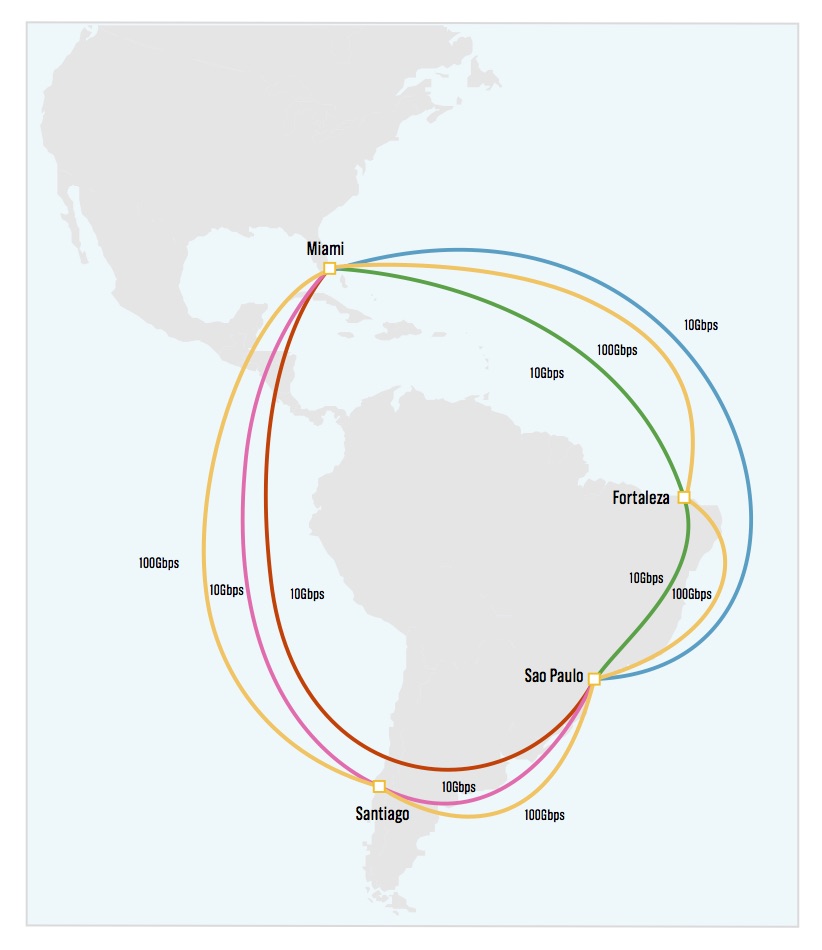
April 4, 2018 - With the completion of two additional 100Gbps “points of presence,” LSST now has a redundant, high-speed, fiber-optic network between Santiago, Chile, and Miami, Florida. This is the international portion of the network for transferring data from the summit of Cerro Pachón to the National Center for Supercomputing Applications (NCSA) at the University of Illinois, some 8000 kilometers (nearly 5000 miles) away. The additional connectivity in Santiago, Chile, and Fortaleza, Brazil, was installed in late February and early March, 2018, and completed the ring shown in yellow in the accompanying figure. Jeffrey Kantor, of the LSST Project Management Office, said, “This development will enable LSST to realize a reliable, high-speed network connecting LSST sites in Chile and the United States. This network will permit LSST data to travel in seconds to our LSST Data Facility at NCSA where it will be processed into scientific data products including real-time alerts of transient events, calibrated images, and catalogs ultimately containing billions of galaxies and stars.” The network links are provided as part of the NSF IRNC: Backbone AmLight Express and Protect (ExP) project and the AmLight Consortium: a group of not-for-profit universities, state, national, and regional research and education networks including the AmLight ExP project at Florida International University, AURA, LSST, RNP, ANSP, Clara, REUNA, FLR, AURA, Telecom Italia Sparkle, Internet2.

Related articles: 

March 29, 2018 - AmLight Press Release 
November 16, 2017 - Preparing to Light up the LSST Network
January 13, 2017 - Fiber Optic Installation
February 4, 2016 - Fiber Optics Data Links Agreement

Image via Amilght

Friday, March 23, 2018

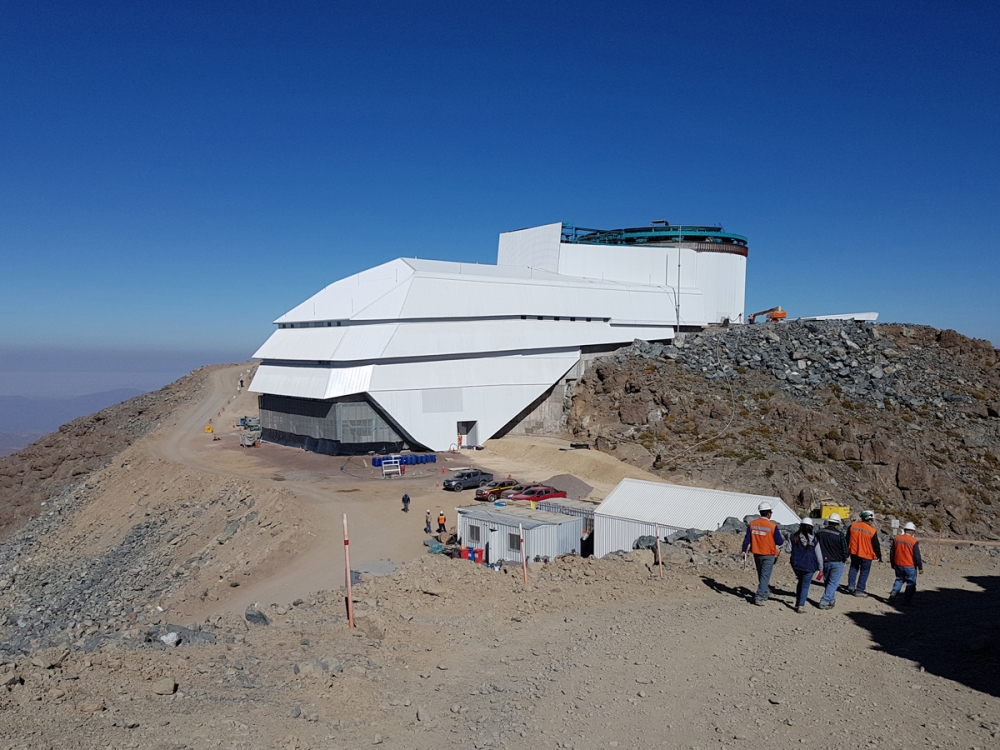
March 23, 2018 - After three years of construction work on Cerro Pachón, general contractor Besalco Construcciones achieved substantial completion of the LSST Summit Facility on February 28, 2018. On that date, the building keys were officially turned over to LSST Construction Inspector Jaime Seriche and LSST Site Manager Eduardo Serrano. Although 20-30 Besalco workers will remain on-site for a few more weeks, addressing punch list tasks, LSST now has authority over the occupation of the facility and the site work schedule. Current activity in the building includes IT equipment installation, furnishing of offices, and post-construction projects for various LSST subsystems.

According to Telescope & Site Architect Jeff Barr, It's worth noting that despite the inevitable challenges, delays, and changes that occurred during the three years of construction, "the contract between LSST and Besalco is concluding on successful terms." Jeff anticipates that the punch list items will be complete and final acceptance of the building will occur in April.

Friday, March 9, 2018

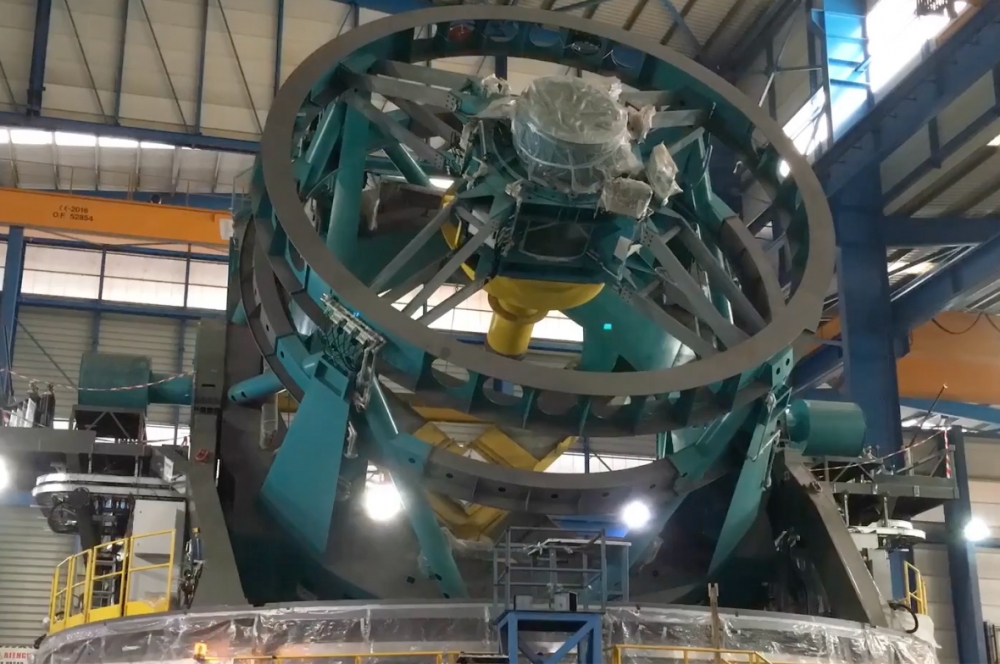
March 9, 2018 - Exciting progress took place in February at subcontractor Asturfeito in Spain, where personnel assigned to the Telescope Mount Assembly (TMA) engaged in balancing and metrology activities.

Although LSST’s telescope will eventually be controlled by computers, current balancing activities require a manual approach in which the telescope, while floating on oil, is moved by winches. Measurements of the force on the telescope are taken to ensure the telescope is balanced whenever it’s off-zenith. This video, taken during the balancing of the elevation structure, illustrates the process.

The LSST Camera and glass mirrors won’t be integrated with the TMA until it arrives on Cerro Pachón and undergoes extensive testing there, so steel surrogates (painted yellow) are being used to simulate the mass of those components in the factory. According to LSST TMA Technical Manager Shawn Callahan, “With the surrogates installed, and the telescope balanced, you could theoretically move the entire structure with your hand.”

The Asturfeito team is also using a laser tracker, mounted on the Primary/Tertiary Mirror (M1M3) surrogate, to carefully measure the locations of the critical optical interfaces, ensuring all the surfaces are exactly where they need to be for successful integration of the Camera and mirrors.

This month, subcontractors from all over Europe are meeting at Asturfeito to install the support equipment necessary to move the telescope under computer control, which is currently scheduled to take place at the end of March. 

Read more about the construction of the TMA here.


Tuesday, February 27, 2018

PROJECT & SCIENCE NEWS -  Noticias del Proyecto

An Education and Public Outreach (EPO) focus group for teachers was held in Tucson on February 3-4. Led by LSST Education Specialist Ardis Herrold, the event gathered 11 high school and college educators from across the U.S. to solicit feedback on prototypes of the online educator tools, including Jupyter Notebook-based interactive astronomy investigations, currently being developed by the EPO team. Read more about the meeting in this recent news post.

The Project Office kicked off a series of spring LSST subsystem meetings on February 12 in Tucson, AZ. Subsystem managers, administrators, and other project office staff members joined LSST’s Senior Management team for a day of project updates and discussion. A group photo of the event is available in the LSST Gallery. The next subsystem meeting will be held by Telescope and Site, on February 28-March 2 in Tucson.

The first column of the LSST Summit Facility Dome was lifted into place on February 13. See photos of this exciting development here, and follow the ongoing progress of the Dome installation on the Summit Webcam, at the bottom of the LSST Gallery home page.

A team of LSST personnel recently returned from a trip to subcontractor Asturfeito, in Spain, to review the factory test plans and procedures that will be used to verify the performance requirements of the Telescope Mount Assembly (TMA). Photos from the TMA site visit are available in the LSST Gallery. During the next six weeks, subcontractors from all over Europe will meet in the Asturfeito factory to install the support equipment necessary to move the telescope under computer control. Those attending will include specialists in motors, encoders, chillers, cable management systems, and servo control.

The LSST Solar System Science Collaboration has launched a blog. Its inaugural post was written by  Matthew Knight, a research scientist at the University of Maryland, and is titled, “Why I’m excited for what LSST will do for comet science.”  

Did you know you can order clothing items featuring the LSST logo at Land’s End? Use this link to browse options and place your order.

PERSONNEL NEWS

Sergio Vega Cabrera joined the Project as a Safety Coordinator on February 12. Sergio will be based in Chile and will be a valuable addition to the Chilean safety team. As LSST construction activity continues to increase, Sergio will help provide the additional safety oversight that is needed for work at the summit, hotel construction, and the base facility.

Austin Roberts joined the Systems Engineering subsystem on February 19 as Senior Systems Engineer. Austin will be responsible for a range of duties including maintenance and advancement of the project’s MagicDraw SysML model, support of subsystem and component test and acceptance reviews, and development of Failure Modes and Effects Analysis (FMEA). He will also be assisting in the development, customization and use of tools necessary to perform systems engineering tasks.

Gabriele Cormoretto joined the DM subsystem on February 19 as the Configuration/Release Engineer in the LSST Data Management System Architecture group, attending to release management and requirements verification.

UPCOMING MEETINGS with LSST INVOLVEMENT

(those with asterisk* are LSSTC funded):

2018


February 28-March 2

LSST Telescope & Site Subsystem Meeting, Tucson, AZ

March 5-9

LSST Systems Engineering/Data Management Joint Subsystem Meeting, Pasadena, CA

April 11-13

LSST Education & Public Outreach Subsystem Meeting, Tucson, AZ

April 16-18

LSSTC Congressional visits, Washington DC

April 18-20

Statistical Challenges for Large-scale Structure in the Era of LSST, Oxford, UK*

April 19-20

AMCL Meeting, Washington DC

May 21-22

DECam Community Science Workshop 2018, Tucson AZ

June 10-15

SPIE Astronomical Telescopes and Instrumentation Meeting, Austin, TX

June 11-15

LSST@Europe3, Lyon, France*

June 19-21

Data Visualization and Exploration in the LSST Era, University of IL/NCSA, Champaign, IL*

August 13-17

LSST Project and Community Workshop 2018, Tucson, AZ


NOTICIAS DEL PROYECTO & CIENTIFICAS

El 3 y 4 de febrero se llevó a cabo en Tucson un grupo de enfoque de Educación y Difusión Pública (EPO) para Profesores. Dirigido por el Especialista en Educación de LSST Ardis Herrold, el evento reunió a 11 educadores de escuelas secundarias y universidades de los EE.UU. para solicitar comentarios sobre prototipos de las herramientas educativas en línea, incluidas las investigaciones de astronomía interactivas basadas en Jupyter Notebook, desarrolladas recientemente por el equipo de EPO. Lea más sobre la reunión en esta publicación reciente.

La Oficina del Proyecto dio inicio a una serie de reuniones del subsistema LSST de primavera el 12 de febrero en Tucson, AZ. Los managers de subsistemas, los administradores y otros miembros del personal de la oficina de proyecto se unieron al equipo de Administración Senior de LSST para un día de actualizaciones y discusión del proyecto. Una foto grupal del evento está disponible en la Galería de LSST. La próxima reunión del subsistema se llevará a cabo por el Telescopio y Sitio, el 28 de febrero-2 de marzo en Tucson.

La primera columna de LSST Summit Facility Dome se levantó el 13 de febrero. Vea fotos de este emocionante desarrollo aquí, y siga el progreso continuo de la instalación del Domo en la webcam del Cerro, en la parte inferior de la página de inicio de la galeria de LSST.

Un equipo del personal de LSST regresó recientemente de un viaje al subcontratista Asturfeito, en España, para revisar los planes de prueba de fábrica y los procedimientos que se utilizarán para verificar los requerimientos de rendimiento del Montaje del Telescopio (TMA). Las fotos de la visita al sitio TMA están disponibles en la Galería LSST. Durante las próximas seis semanas, los subcontratistas de toda Europa se reunirán en la fábrica de Asturfeito para instalar el equipo de soporte necesario para mover el telescopio bajo control informático. Los asistentes incluirán especialistas en motores, codificadores, enfriadores, sistemas de administración de cables y servo control.

La Colaboracion Cientifica del Sistema Solar de LSST ha lanzado un blog. Su publicación inaugural fue escrita por Matthew Knight, investigador científico de la Universidad de Maryland, y lleva el título: "Por qué estoy entusiasmado con lo que LSST hará por la ciencia de los cometas".

¿Sabía que puede pedir ropa con el logotipo de LSST en Land's End? Use este enlace para navegar por las opciones y hacer su pedido.

NOTICIAS DEL PERSONAL

Sergio Vega Cabrera se unió al Proyecto como Coordinador de Seguridad el 12 de febrero. Sergio tendrá su sede en Chile y será una valiosa incorporación al equipo de seguridad de Chile. A medida que la actividad de construcción del LSST continúe en aumento, Sergio ayudará a proporcionar la supervisión de seguridad adicional que se necesita para trabajar en el cerro, la construcción del hotel y el base facility.

Austin Roberts se unió al subsistema de Ingeniería de Sistemas el 19 de febrero como Ingeniero Senior de Sistemas. Austin será responsable de una serie de tareas, que incluye el mantenimiento y el avance del modelo MagicDraw SysML del proyecto, la compatibilidad con el subsistema y la prueba de componentes y las revisiones de aceptación, y el desarrollo de modos de Falla y Análisis de Efectos (FMEA). También colaborará en el desarrollo, la personalización y el uso de las herramientas necesarias para realizar tareas de ingeniería de sistemas.

Gabriele Cormoretto se unió al subsistema DM el 19 de febrero como el Ingeniero de Configuración / Lanzamiento en el grupo de Arquitectura del Sistema de Administración de Datos LSST, asistiendo a la gestión de lanzamiento y verificación de requisitos.

Próximas reuniones con participación de LSST 

(aquellos con un asterisco* son financiados por LSSTC):

2018


Febrero 28-Marzo 2

Reunión del Subsistema de LSST Telescopio & Sitio, Tucson, AZ

Marzo 5-9

Reunión de Subsistema en Conjunto de LSST Ingeniería de Sistemas/Gestión de Datos, Pasadena, CA

Abril 11-13

Reunión del Subsistema de LSST de Educación y Difusión Pública, Tucson, AZ

Abril 16-18

Visitas del Congreso de LSSTC, Washington DC

Abril 18-20

Desafíos Estadísticos de la Estructura a Gran Escala en la Era de LSST, Oxford, UK*

Abril 19-20

Reunion AMCL, Washington DC

Mayo 21-22

Taller de Ciencia Comunitaria DECam, Tuscon AZ

Junio 10-15

SPIE Reunión de Telescopios e Instrumentación Astronómica, Austin, TX

Junio 11-15

LSST@Europe3, Lyon, France*

Junio 19-21

Visualización de Datos y Exploración en la Época de LSST, Universidad de IL/NCSA, Champaign, IL*


Tuesday, February 27, 2018
A ship similar to the ones that will transport LSST components is seen here docked in the Port of Coquimbo, Chile.  Image credit:  M. Logue, LSST/NSF/AURA
Main Image Caption: 
A ship similar to the ones that will transport LSST components is seen here docked in the Port of Coquimbo, Chile. Image credit: M. Logue, LSST/NSF/AURA
Image Credit: 
M. Logue, LSST/NSF/AURA

February 27, 2018 - In calendar year 2018, almost $100M of equipment will be transported to Cerro Pachón from the U.S. and around the world for integration into the LSST summit facility building. Major items include the Telescope Mount Assembly (TMA), the Coating Chamber, the Dome, the Primary/Tertiary Mirror (M1M3) and Secondary Mirror (M2), the mirror cells, and the hexapod rotator (with its twin spare). These items will be gathered from several locations, including Rochester, NY; Tucson, AZ; Denver, CO; Italy, Spain, and Germany, and shipped to the Chilean port of Coquimbo for ground transport to the summit. The designer of much of the complex, but flexible, logistics program is LSST Principal Surveyor Michael Logue.

Michael joined the project in May of 2017 with over 30 years of broad cargo and freight management experience including hands-on project cargo supervision. He is assisting the Telescope and Site team by developing a logistical plan and overseeing its execution for the timely and safe delivery of all critical components.  Compared to many other projects Michael has been involved with, LSST involves “diverse logistical challenges with unique goals and, ultimately, bold positive outcomes.” The LSST summit webcam and current images in the Gallery show construction progress; currently trusses for the dome are being delivered in large shipping containers from Italy and their installation has begun.

Although shipping logistics and timetables are still being finalized, at this point we anticipate the TMA, Coating Chamber, and the Mirrors, Cells, and Surrogates will travel together on chartered specialized heavy lift cargo ships. Other components will be shipped in about 70 x 40’ shipping containers as orchestrated by the selected forwarding company Kuehne + Nagel. Our contracted shipping company, BBC Chartering, will have a cargo ship stop in Antwerp, Belgium or Hamburg, Germany for the Coating Chamber and Washing Station, then travel on to the port of Aviles in Spain to pick up the TMA, and then proceed onward to Chile. In parallel, one ship will depart Houston with components previously shipped by ground (from CO and AZ) by Precision Heavy Haul to that port. The M2 is likely to be transported to Albany, NY, for travel down the Hudson directly to Chile. The Auxiliary Telescope will be transported by container from Tucson, via Houston to Chile in early March.

After getting everything to the Chilean port of Coquimbo, it will take over 100 individual trips to the summit with truckloads full of components in conjunction with our heavy hauler, Javier Cortes. Pieces will be stored on AURA property just below the summit and then brought up in a timely sequence as integration proceeds. Once all the components are on the summit, the existing logistical situation on the top, already a shell game of relocating pieces awaiting installation to make room for others, will become even more complex exercise involving over 6000 freight tons as LSST integration continues to move forward. 

This is an extremely complex period of activity for LSST, putting the pieces together to build this unique facility. Stay tuned for updates over the next year as we stay on track for full occupancy of the summit facility by year’s end.   

Friday, February 16, 2018

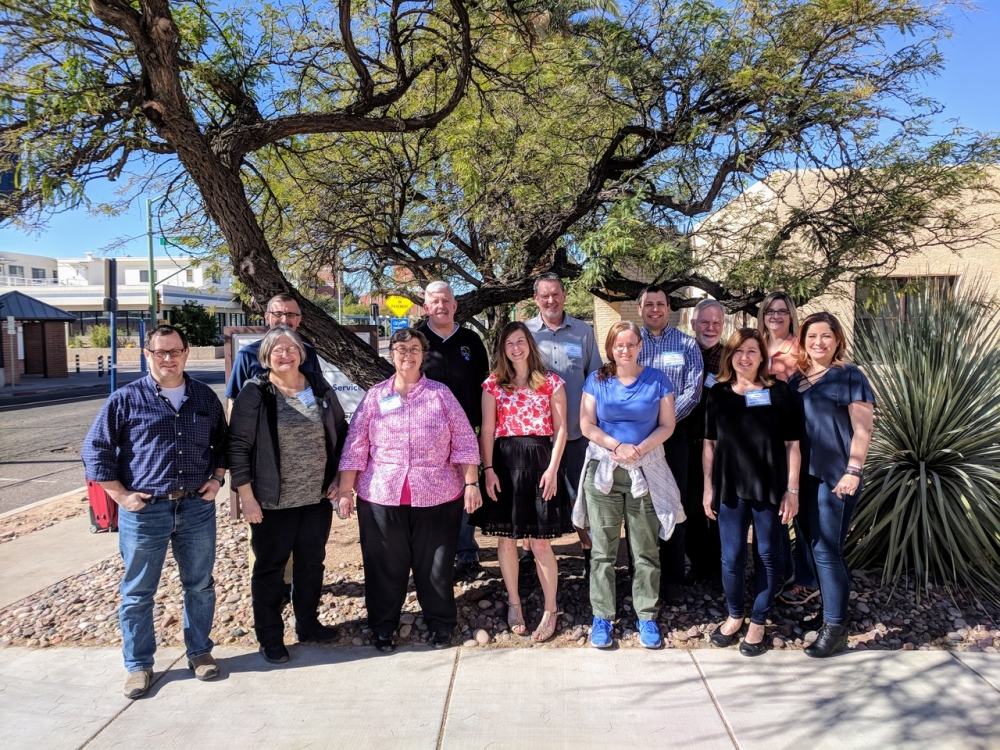
February 16, 2018 - An Education and Public Outreach (EPO) focus group for teachers was held in Tucson on February 3-4. Led by LSST Education Specialist Ardis Herrold, the event gathered 11 high school and college educators from across the U.S. to solicit feedback on prototypes of the online educator tools, including Jupyter Notebook-based interactive astronomy investigations, currently being developed by the EPO team. Opinions provided by the participants will help guide future stages of EPO product development, ensuring the continued alignment of EPO products with educator needs.

Over the course of the two-day focus group meeting teachers were introduced to the suite of online tools that will be available through EPO’s Education Hub. The Education Hub, a section of the larger EPO Portal, will house resources specific to educators such as national education standards alignment and assessment guides, information about professional development opportunities, and classroom investigations featuring real LSST Data in Jupyter Notebooks.

“This meeting was important,” reflected Ardis, “because it was the first time anyone other than our team has looked at what we’re developing. Although we anticipated there would be some confusion with the notebooks, we were pleasantly surprised at how easily the teachers figured out how to work with them.”

Throughout each day, teachers filled out detailed questionnaires created by EPO Evaluation Specialist Ellen Bechtol in order to capture their reactions to the material presented. “The central question of whether they would use these tools in their classroom,” says Ellen, “was answered by this group with a strong ‘yes.’” All of the feedback from this focus group will help the EPO team prioritize product features so that time and resources are spent on those most useful to educators.

The teachers who participated in this focus group meeting were carefully selected by the EPO team for their expertise in both astronomy and education. The fact that they were enthusiastic about the direction of LSST’s EPO products is encouraging, but it’s only one piece of the puzzle; once the EPO team has had the chance to refine the notebooks a bit further, they will seek opinions from a group that represents a more typical population of educators. That focus group is currently scheduled for July 16-18. In the meantime, Ardis hopes to conduct an informal event for local educators and/or astronomy students. “If we can test reactions to some of the individual components ahead of time,” she says, “We can refine the way we will present them to the teachers in July in order to get the quality feedback we need.”

More information about the full range of LSST EPO activities can be found in this news item from October 2017. Additional photos from the focus group meeting are available in the LSST Gallery.


Pages

Financial support for Rubin Observatory comes from the National Science Foundation (NSF) through Cooperative Agreement No. 1258333, the Department of Energy (DOE) Office of Science under Contract No. DE-AC02-76SF00515, and private funding raised by the LSST Corporation. The NSF-funded Rubin Observatory Project Office for construction was established as an operating center under management of the Association of Universities for Research in Astronomy (AURA).  The DOE-funded effort to build the Rubin Observatory LSST Camera (LSSTCam) is managed by the SLAC National Accelerator Laboratory (SLAC).
The National Science Foundation (NSF) is an independent federal agency created by Congress in 1950 to promote the progress of science. NSF supports basic research and people to create knowledge that transforms the future.
NSF and DOE will continue to support Rubin Observatory in its Operations phase. They will also provide support for scientific research with LSST data.   


Contact   |   We are Hiring

Admin Login

Back to Top